London Wine Fair didn't just want to talk about sustainability, they wanted to lead lasting change across the drinks industry
The situation
London Wine Fair is under new ownership and heading into its 45th anniversary, a moment its leadership wanted to use to reassert the show as a genuine authority on sustainability in the drinks trade. They had already been the first major drinks event to properly showcase sustainability back in 2022. But the ambition for this year was bigger: turn that early lead into something measurable, credible with real results.
The problem
Good intentions aren’t enough to make a meaningful difference and the LWF team recognised they needed expert help on a number of areas: an actionable strategy that covered its own operational footprint, a content programme substantial enough to shift how thousands of visitors and exhibitors think about sustainability while they are on site, and hard evidence afterwards that its efforts it actually worked. That meant reviewing years of existing sustainability reporting, building relationships with the right partners, stakeholders and NGOs, designing and curating a content programme from scratch, and then proving impact with real data.
What made it harder than it looked
LWF wanted a room full of exhibitors and visitors to engage in sustainability and put it at the centre of their operational thinking. That kind of intention only works if the show has done the same work on itself. An event bringing together over 10,000 industry professionals a year has a real footprint, and a content programme launched without confronting that honestly would have looked exactly like the greenwashing LWF was committed to avoiding.
The new ownership brought real ambition but a tight deadline. Turning ambition into sessions that felt essential and genuine ‘must-attends’ meant finding NGO partners and speakers who would talk honestly about what had worked for them and what hadn’t. The brief was to deliver credible, actionable advice and thought leadership - LWF recognised that we had the expertise and connections to do exactly that.
What we did
- Developed LWF's sustainability strategy and public-facing sustainability communication messaging, reviewing existing reporting and working directly with the LWF and its venue, London Olympia, to find where tangible improvements could be made.
- Built new sustainability questions into the show's registration process, so LWF now captures data on visitor attitudes and behaviour it never had before.
- Designed and ran post-show sustainability surveys of both visitors and exhibitors, to measure what actually worked rather than making unverified assumptions.
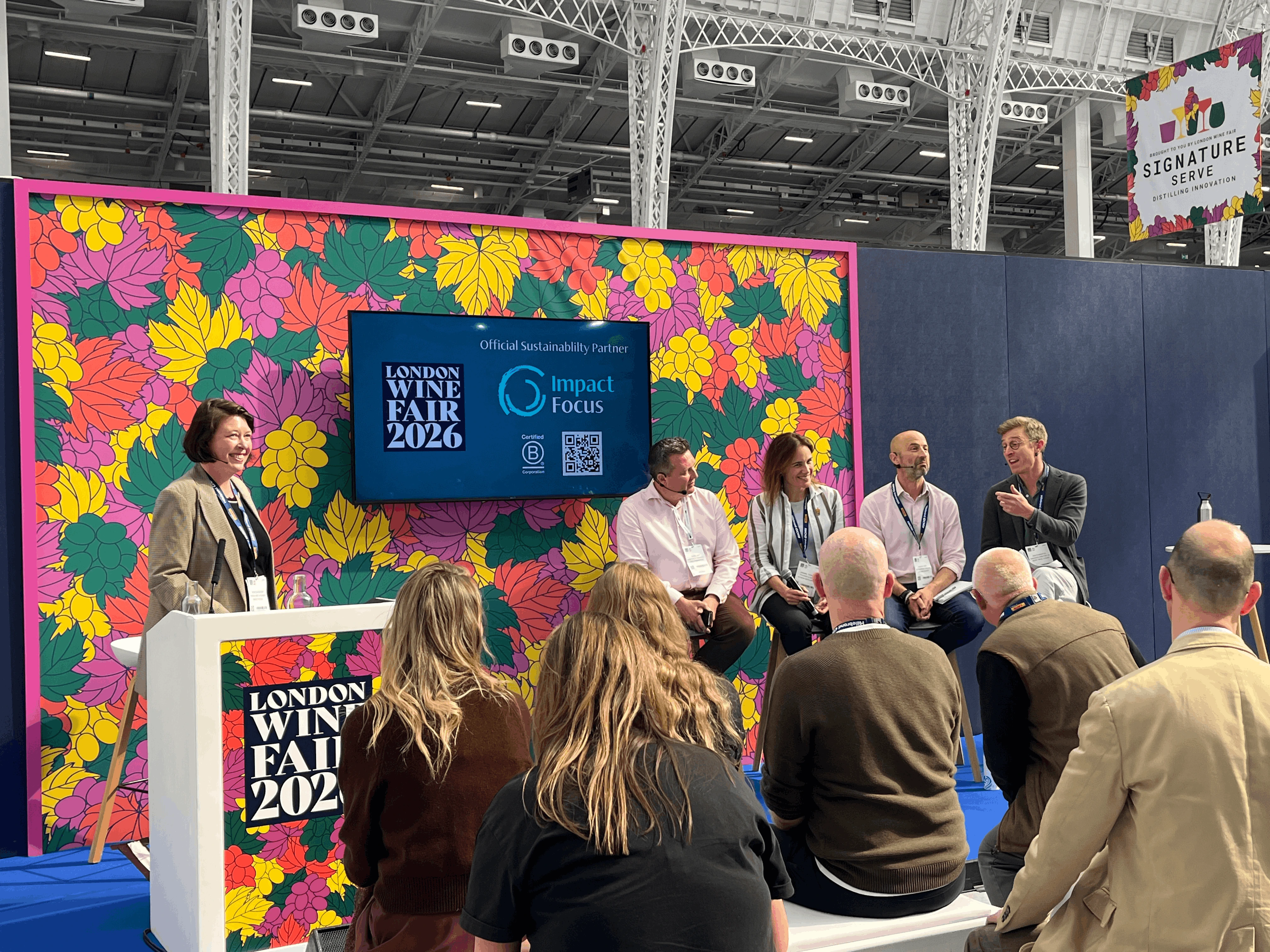
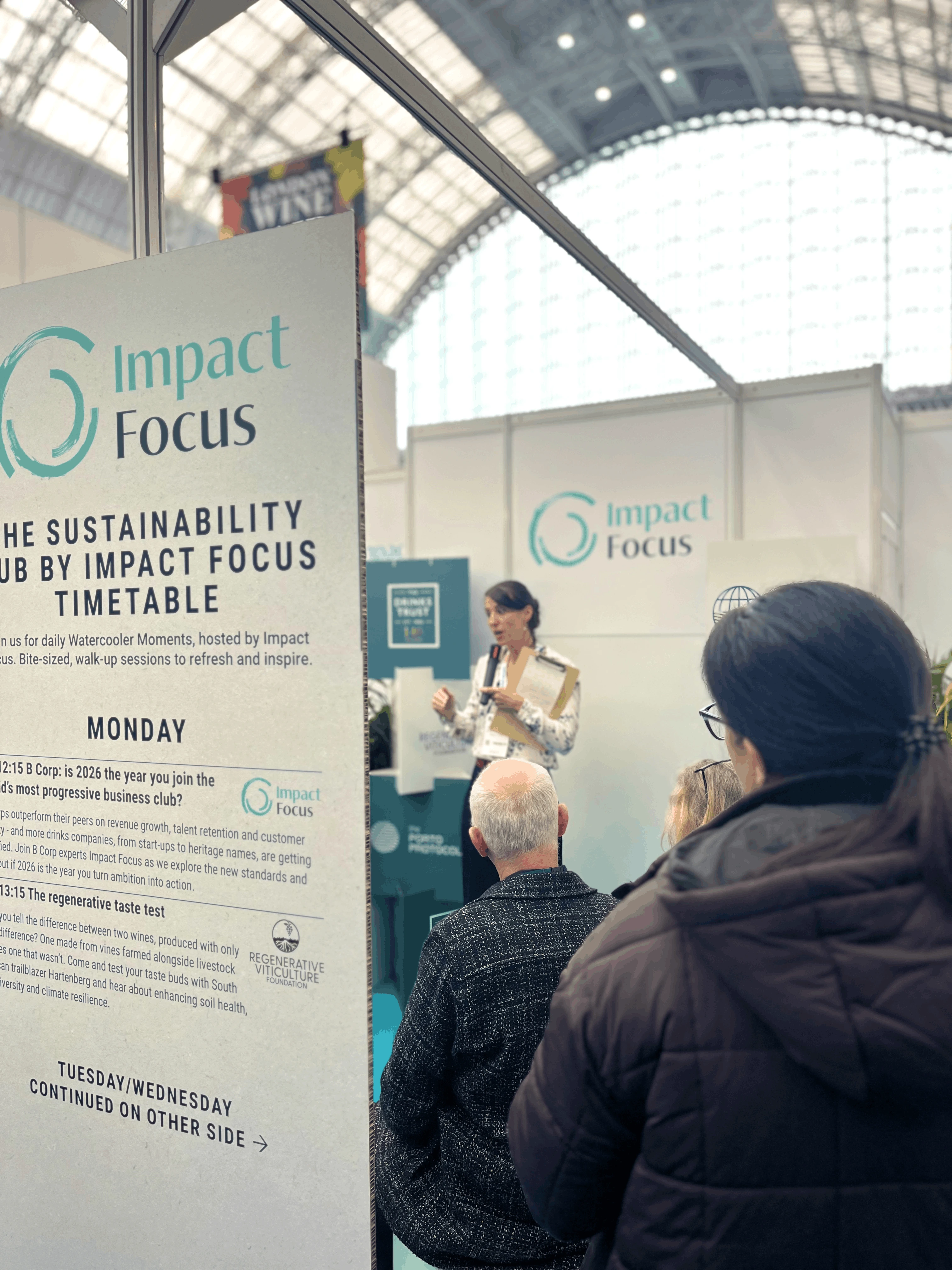
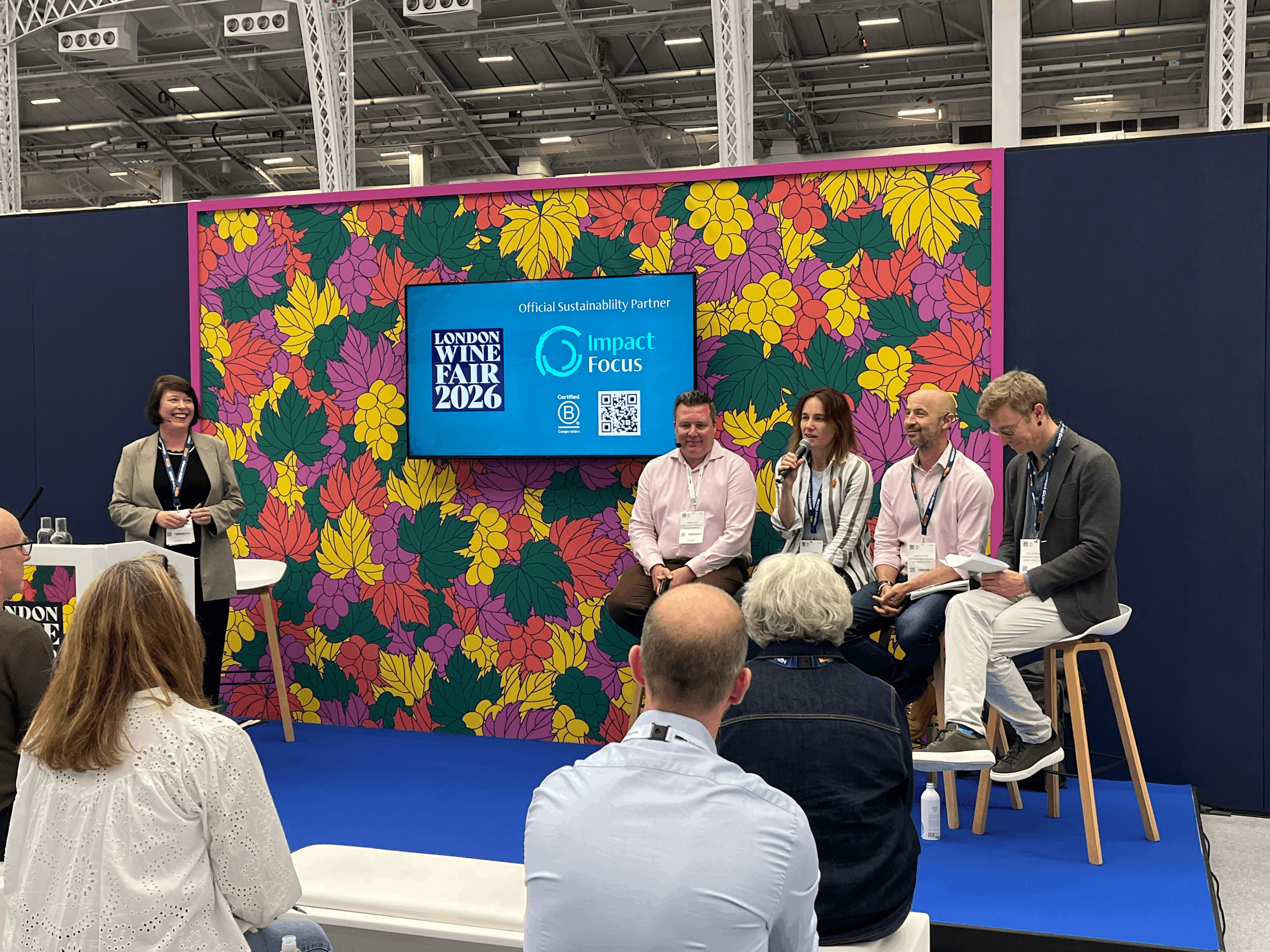
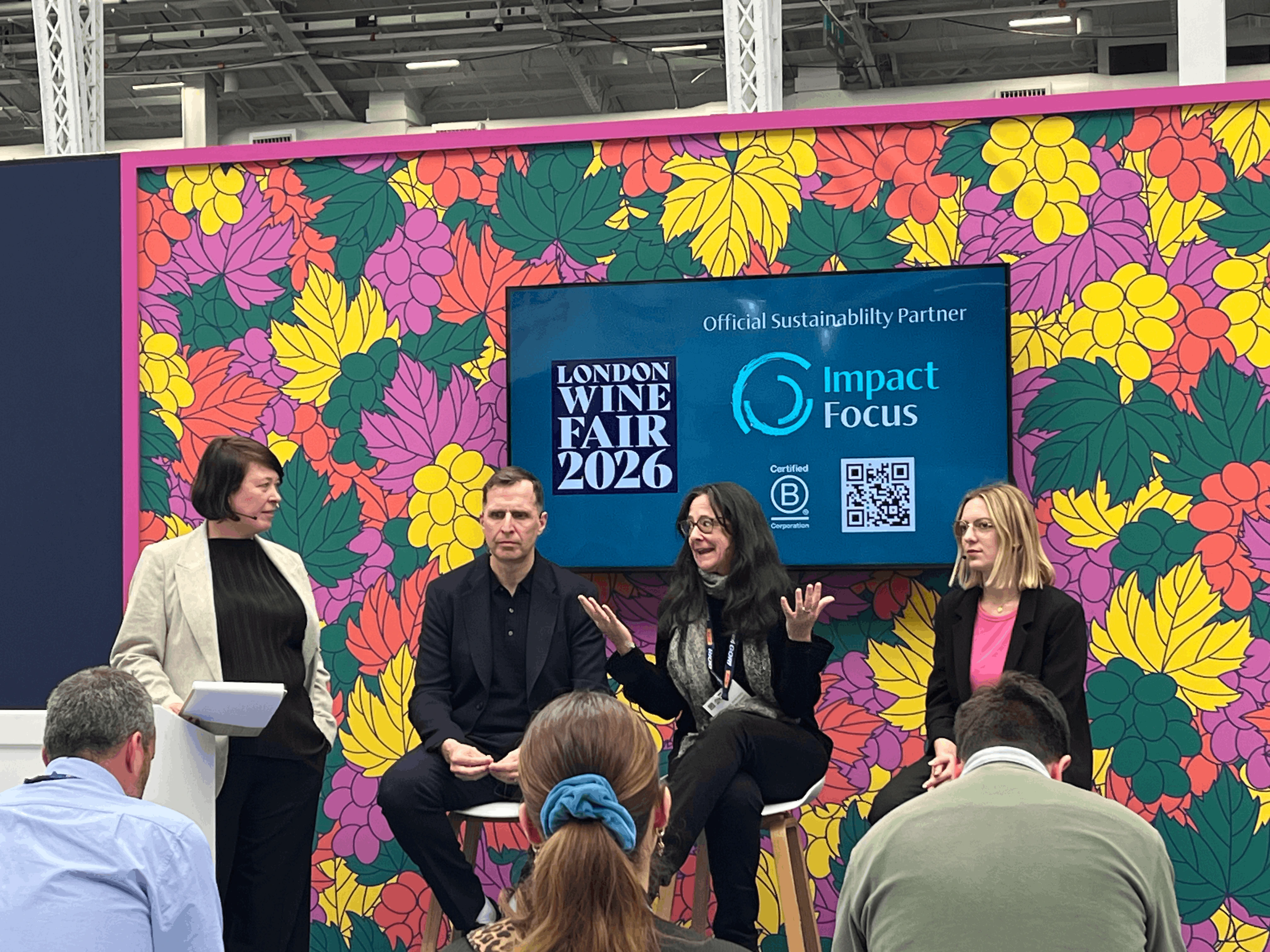
- Curated and delivered a sustainability content programme of over 13 sessions across the three days, including panel discussions on Centre Stage and bite-sized “Watercooler Moments” talks.
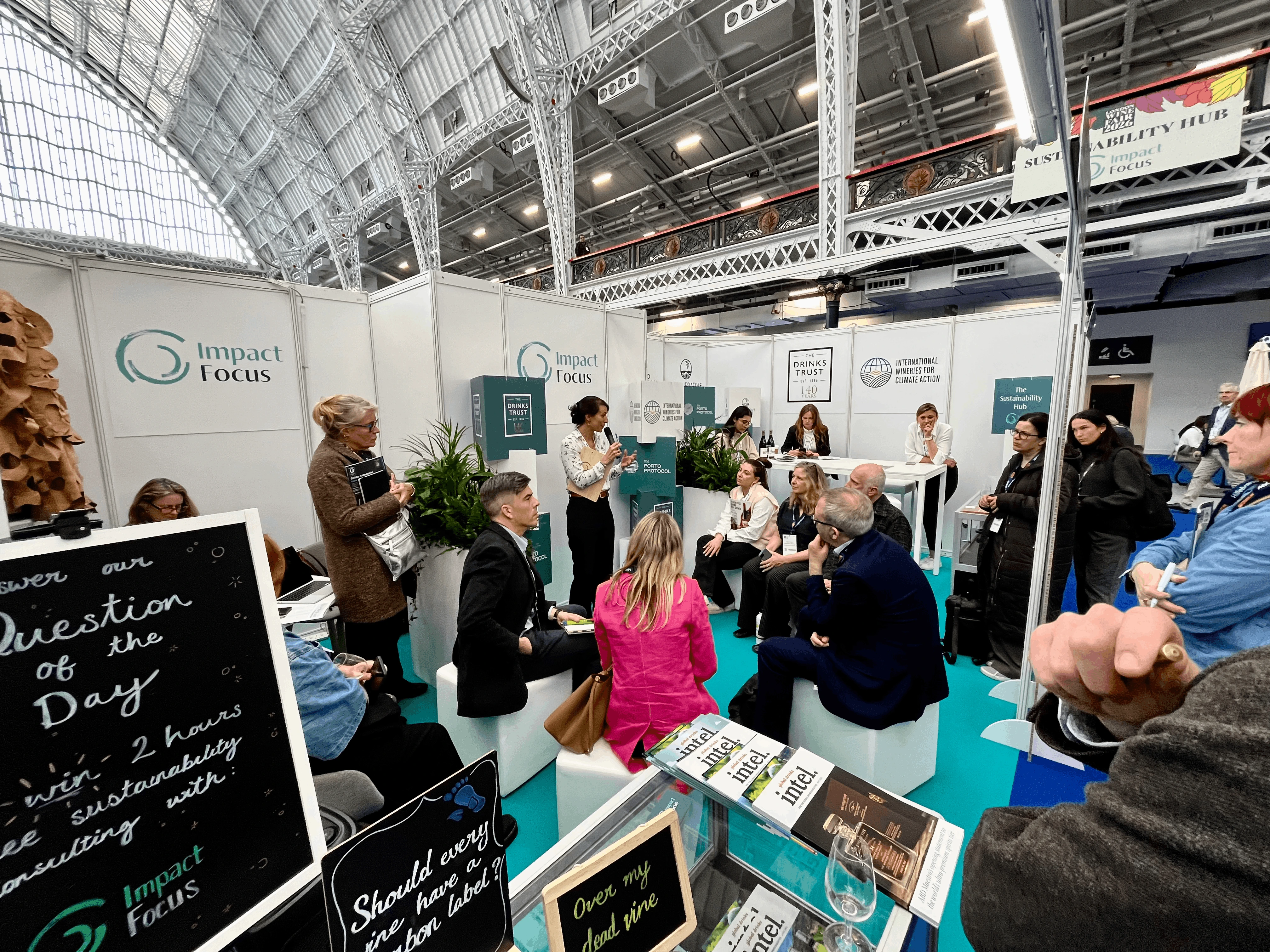
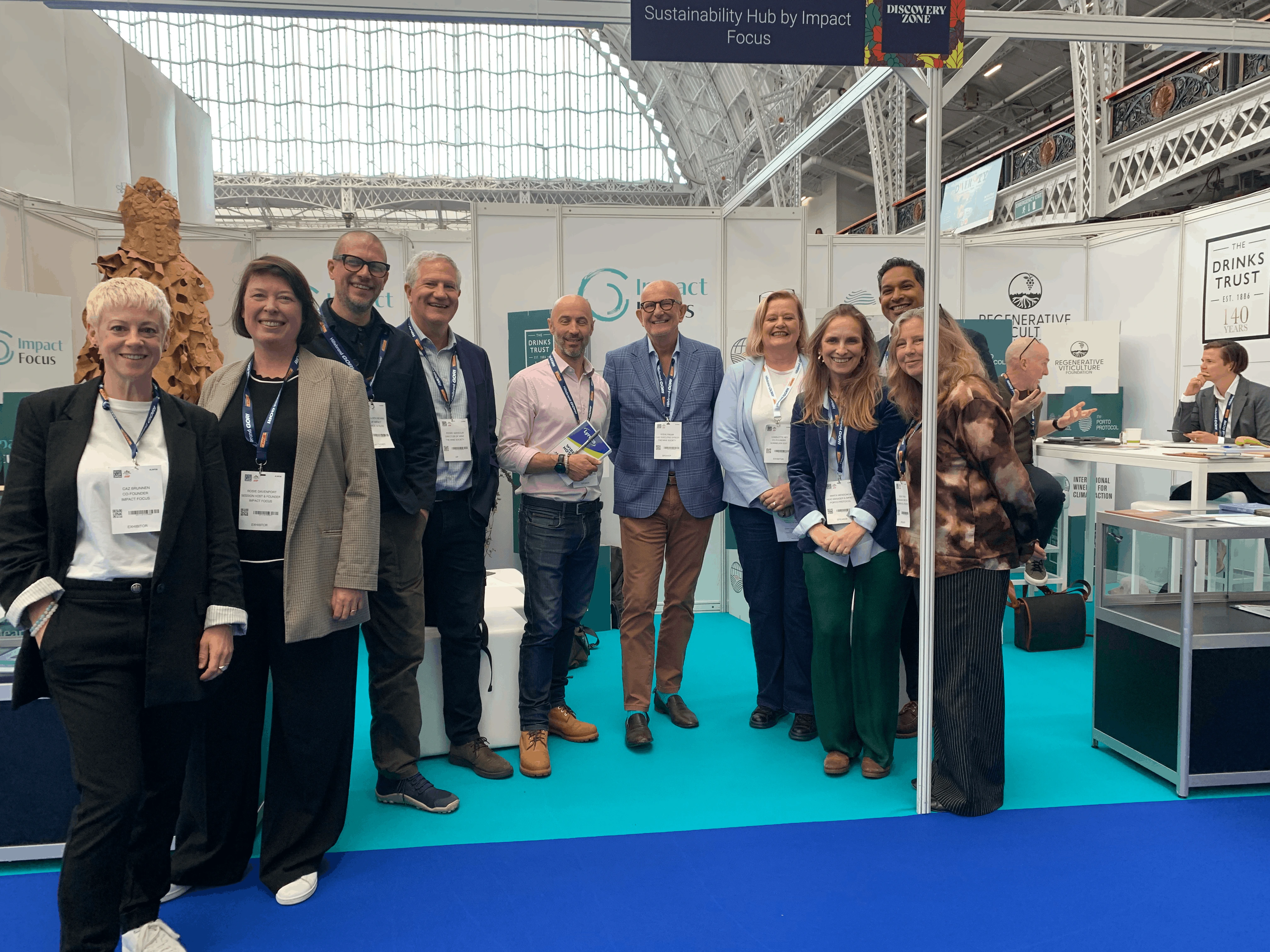
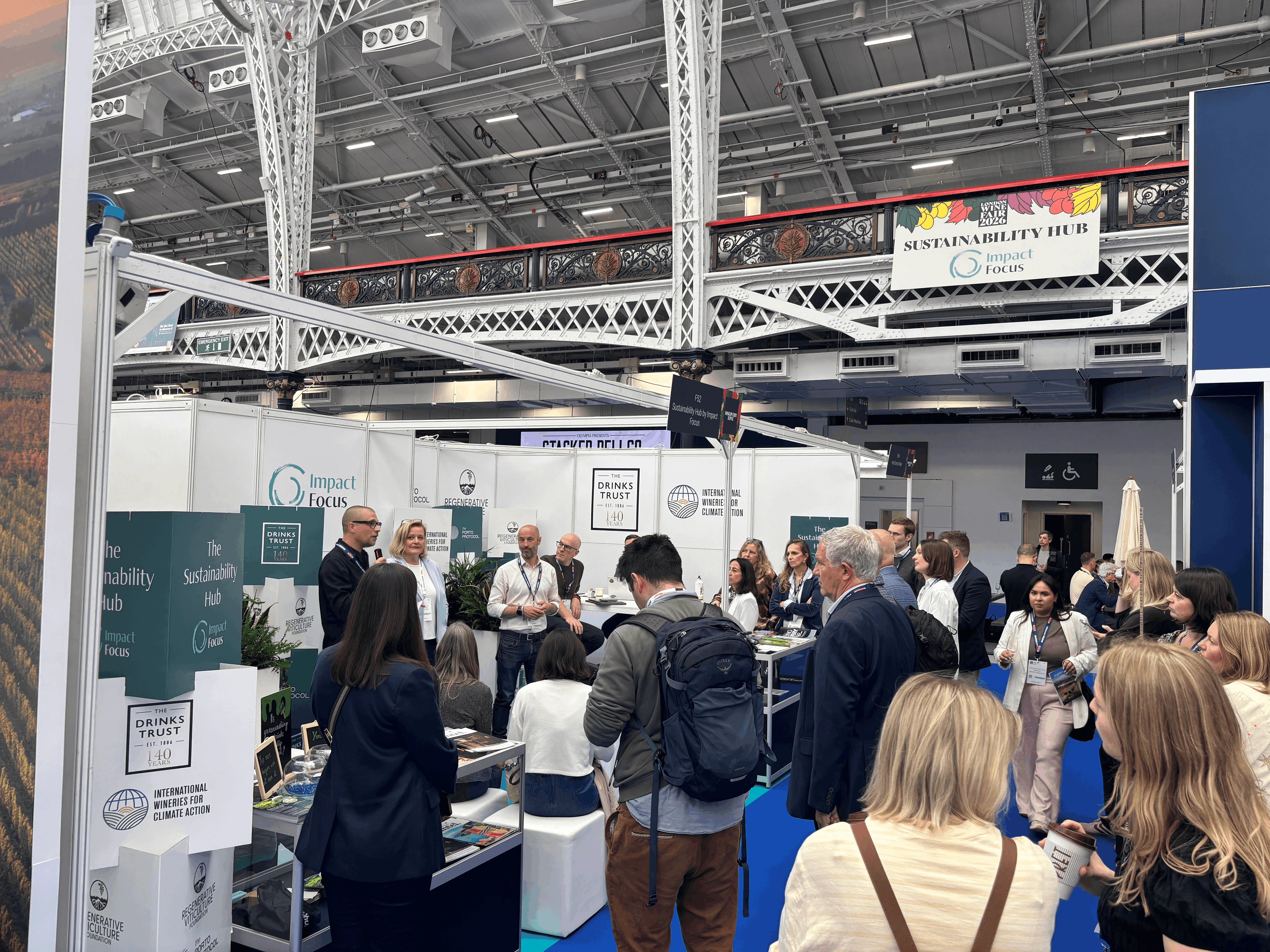
- Launched the inaugural Sustainability Hub by Impact Focus, bringing together four leading NGO and industry partners as a dedicated space for practical sustainability thinking at the heart of the show.
- Led onsite media engagement, including a significant number of press interviews, to amplify the story beyond the show floor.
What it delivered
- A baseline of data to build an actionable roadmap to improve the LWF's footprint, working with all its key stakeholders.
- Among returning visitors, 60% noticed more sustainability content and messaging than in previous years.
- Over half of visitors said sustainability shaped their interest in specific exhibitors or wines.
- Almost three-quarters of visitors rated the sustainability content as relevant to their business.
- Two-thirds of exhibitors had at least one sustainability-related conversation with a visitor on their stand, showing we delivered against the appetite visitors brought to the show.
- The vast majority of exhibitors now say sustainability is core or important to their business, and most had taken real, concrete steps to reduce their stand's environmental impact.
- Exhibitors rated the event's own environmental support and infrastructure as adequate or better.
- A newly independent, credible evidence base LWF can build on year after year, rather than relying on impression alone.
Sound familiar?
You know sustainability has to be a bigger part of how your business runs. What you don't know is where to start, what matters most and what can wait. Navigating sustainability sustainablity is complex, which means that, despite good intentions, companies are overwhelmed and let it drift. We'll get you on track, with a clear, practical roadmap.
“Drawing on her background in journalism and communications, Rosie's engagement with London Wine Fair as a partner has been exceptional throughout.”
“Impact Focus joined London Wine Fair in 2025 to support the development of our sustainability strategy and programme content. In a relatively short period of time, Rosie made an immediate and meaningful impact on both our thinking and our approach.
From the outset, it became clear that there was a strong alignment between our organisations in both ethos and ambition. Together, we recognised a significant opportunity to drive meaningful change within the drinks industry through collaboration, education, and practical support in the field of sustainability.
By combining the expertise of Rosie and the Impact Focus team with the scale, reach, and influence of London Wine Fair, we have created a genuinely powerful partnership.
A key part of Impact Focus’s remit was to help London Wine Fair take a closer and more critical look at our own operational practices. While the LWF team firmly believes in the value of bringing together more than 10,000 industry professionals each year to connect, learn, and collaborate, we are equally conscious of the responsibility that comes with hosting an event of this scale.
Rosie undertook a thorough review of our sustainability reports from recent years and worked closely with both Olympia and our operations team to identify areas where tangible improvements could be made. Importantly, this was never approached as a one-off exercise, but rather as an ongoing partnership committed to continual progress. This includes developing further guidance and support for both exhibitors and visitors in the years ahead. Rosie also helped implement new sustainability-focused questions within our registration process, enabling us to gather valuable data that will directly inform future improvements.
Alongside this internal work, we agreed that sustainability should take a far more prominent role within the Fair itself. As a result, sustainability content and discussion sessions were positioned centre stage across all three days of London Wine Fair. Rosie embraced this opportunity wholeheartedly, curating three compelling and thought-provoking sessions featuring some of the most authoritative and respected voices in the industry. These sessions quickly became essential viewing for attendees.
As substantial as this contribution already was, Rosie then proposed taking the initiative even further. Building on one of London Wine Fair’s core objectives — encouraging collaboration between businesses, associations, and organisations to drive positive industry change — she suggested the creation of a dedicated Sustainability Hub within the Discovery Zone, adjacent to Centre Stage.
We immediately recognised the value of the idea, and Rosie swiftly brought together four leading NGO partners while coordinating a further nine sessions to take place within the Sustainability Hub itself. The result was a dynamic and highly engaged focal point for sustainability dialogue throughout the Fair.
Drawing on her background in journalism and communications, Rosie’s engagement with London Wine Fair as a partner — as well as her communication with the wider industry — has been exceptional throughout. In addition to leading an extraordinary programme of 11 sessions across the three-day event, she also coordinated and participated in a significant number of press interviews onsite.
Rosie’s energy, professionalism, creativity, and commitment have been remarkable from start to finish. As the saying goes, not all heroes wear capes — in Rosie’s case, it’s more likely to be a fabulous dress made from recycled cork.”